What Should You Ask a Brewhouse Supplier Before Ordering?
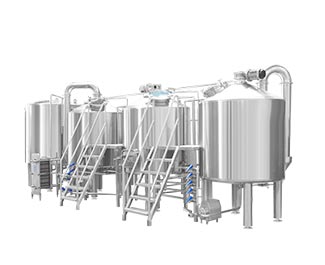
Before ordering a brewhouse, ask for measurable specifications rather than a general equipment list. Confirm working volume, brews per day, heating power, water and steam demand, electrical load, 304 or 316 stainless grades, internal Ra finish, pump flow, automation scope, FAT procedures, installation duties, warranty terms, and spare-parts availability. The Brewers Association has reported brewery water-use ratios around 7 barrels of water per barrel of beer, while better-performing operations can run below 3:1. Ask the supplier to put performance assumptions, utility loads, drawings, included components, delivery scope, and acceptance requirements in writing before any deposit is paid.
A capacity label needs more detail before it can be compared with another quote. A 10 BBL brewhouse may describe nominal brew length, while gross vessel volume, usable liquid volume, headspace, high-gravity brewing limits, and wort remaining in piping can differ. Ask for gross and working volumes in both barrels and liters, plus the expected cold wort volume transferred to the fermenter. If 10 BBL enters the kettle but only 9.2 BBL reaches fermentation, the process yield is about 92% before fermentation losses are considered.
Production rate matters just as much as vessel volume. Ask the supplier to provide estimated mash-in, conversion, lautering, sparging, heating, boiling, whirlpool, transfer, and cleaning times for a stated recipe. A system completing one cycle in 6 hours behaves very differently from one requiring 8 hours when a brewery plans two or three turns per day. Request the assumptions behind those figures, including original gravity and grain weight, because a 5% ABV pale ale and a high-gravity beer can produce very different lautering times.
That timetable leads naturally to vessel arrangement. A two-vessel design may combine mash and lauter functions in one vessel and kettle and whirlpool functions in another, while three- and four-vessel layouts can separate more operations. Separation can allow one batch to move forward while another begins, but ask the supplier to calculate actual overlap rather than promising “higher efficiency.” A brewery producing 2 brews per day in 2026 may gain little from equipment sized for 6 turns unless future production, labor, and cellar capacity support that schedule.
The material specification should then move beyond the phrase “food-grade stainless steel.” Ask which product-contact parts use AISI 304, 304L, 316, or 316L, and request material certificates when traceability matters. 3-A Sanitary Standards commonly use AISI 300-series stainless steel as a benchmark for hygienic product-contact construction, subject to suitability for the service. Grade alone does not describe fabrication quality, so shell thickness, jacket construction, weld treatment, passivation, drainage, gasket material, and fitting standards should appear in the technical schedule.
Surface finish deserves a measurable value. 3-A guidance generally calls for product-contact surfaces to be 32 µin Ra, or 0.8 µm Ra, or smoother, with surfaces free from pits, folds, and crevices. Ask whether the quoted Ra applies to vessel interiors only or also to sanitary pipework, welded areas, manifolds, and other wetted surfaces. A statement such as “mirror polished” is less useful than a specified Ra value supported by inspection records.
Ask the supplier to identify where welds will be ground and polished, how passivation is performed, whether internal welds are visually inspected, and what records are available after fabrication. A brewhouse ordered in 2026 should arrive with documented materials and fabrication details that another technician can understand years later, not only photographs taken before shipment.
Heating specifications come next because they affect both cycle time and building services. For electric heating, request heater capacity in kW, supply voltage, frequency, phase, full-load current, and the number of heating stages. For steam, request operating pressure, peak steam demand, condensate requirements, valve sizes, and whether the boiler or steam generator is included. A quoted “60 kW system” should state whether 60 kW refers only to kettle elements or total connected brewhouse power.
Ask the manufacturer to provide a heating calculation tied to actual liquid volume. Heating 1,000 liters by 60°C requires about 69.8 kWh of ideal thermal energy before vessel losses and system efficiency are considered. A practical heating time therefore depends on usable heater output, heat transfer, insulation, ambient conditions, and simultaneous loads. Even a 10% difference in effective heating performance can alter daily scheduling when several batches are brewed back to back.
Utilities should be reviewed together rather than one connection at a time. The Brewers Association has published guidance showing average brewery water use around 7 barrels of water for every barrel of packaged beer, while some craft breweries operate below 3:1; the same manual notes that about 70% of incoming brewery water may leave as wastewater. Equipment selection therefore affects water supply, drains, wastewater fees, hot-water storage, and cleaning capacity, not only brewing performance.
| Ask the supplier for | Figures that should appear |
|---|---|
| Electrical supply | Voltage, phase, Hz, connected kW, maximum current |
| Brewing water | Required pressure, peak flow, connection diameter |
| Steam | Pressure, kg/h or lb/h consumption, condensate return |
| Compressed air | Pressure, flow, air-quality requirement |
| Hot and cold liquor | Tank working volume, recovery time, temperature range |
| Drainage | Outlet sizes, expected peak discharge |
| Cooling | Glycol temperature, flow, heat load, connection size |
Utility numbers also help determine whether the building can support the equipment before it arrives. Ask for a dimensioned layout showing vessel diameter, total height, platform elevation, maintenance clearance, control-panel position, pipe routes, floor fixing points, and utility entry locations. If a brewhouse vessel weighs 1,500 kg empty and contains several thousand liters during operation, structural review should use the filled operating condition rather than shipping weight.
Controls need the same level of definition. The word “automatic” might cover temperature control only, or it might include water dosing, valve sequencing, pump speed, recipe steps, rake movement, alarms, and transfer logic. Ask which PLC, HMI, VFDs, sensors, and communication protocols are supplied. Also ask who owns program backups and whether replacement components are available locally. A control platform that was common in 2020 may still be serviceable, but component availability should be verified rather than assumed.
For micro brewery equipment, ask for pump curves instead of accepting only motor power. A 2.2 kW centrifugal pump does not tell you its usable flow at the head pressure created by pipe length, fittings, elevation, heat exchangers, and valves. Request flow in L/min or gal/min at specified head, motor efficiency, VFD range, seal type, wetted material, and recommended spare seals. A pump selected 20% below the required operating point can lengthen transfers and cleaning cycles even when its motor rating appears adequate.
Cleaning arrangements should be reviewed using the actual flow path. Ask which vessels have spray balls or rotary devices, how cleaning solution returns to the CIP vessel, whether low points fully drain, and which valves must be manually repositioned. 3-A guidance places strong emphasis on cleanability, drainage, accessibility, and the absence of product-retaining imperfections. If a supplier claims full CIP capability, request a piping diagram showing the route through every wetted branch rather than relying on the phrase alone.
Before shipment, define the Factory Acceptance Test in the purchase documents. A useful FAT can include water circulation, pump rotation, valve operation, temperature-input checks, level-sensor checks, VFD control, HMI screens, alarm functions, heating stages where practical, and leak inspection. Ask for an agreed checklist with pass/fail fields. For a 2026 project involving 30 or 40 controlled I/O points, testing only whether the touchscreen powers on provides little information about the assembled system.
Request photographs or video of the nameplates, control cabinet, vessel interiors, welds, piping, pumps, and FAT steps before packing. Record model numbers for major bought-in components. If one sensor fails 18 months later, a readable model number can shorten replacement work far more than a generic parts description.
Commercial scope should be checked line by line after the technical scope is stable. Ask whether the price includes platforms, heat exchanger, pumps, hard piping, valves, hoses, oxygenation hardware, flowmeters, temperature probes, control cabinet, spare gaskets, crating, inland freight, ocean freight, commissioning, technician travel, and operator training. Two quotations can differ by 15% while supplying noticeably different scopes, so comparing only the final price can give a false comparison.
Warranty wording also needs dates and responsibilities. Ask when coverage starts: factory shipment, arrival on site, commissioning, or first production. Confirm whether failed parts, international freight, technician labor, and travel are covered. Ask for the recommended 12- or 24-month spare-parts package, including seals, gaskets, sensor types, valve service kits, fuses, contactors, and any proprietary components. A low-cost seal stored locally can prevent days of downtime while an international replacement is shipped.
The final purchase documents should connect the quotation, approved drawings, utility schedule, component list, FAT checklist, manuals, electrical drawings, P&ID, warranty, delivery terms, and change procedure. Brewers Association benchmarking has used samples such as N=211 when reporting industry water-use performance, showing why measured operating data are more useful than general claims. Apply the same standard to a supplier: ask for numbers, operating conditions, drawings, test records, named components, and written responsibilities before manufacturing begins.